





Executive Summary
- Uneven sectoral recovery: Available indicators suggest an uneven economic recovery. Sectoral estimates for 2025 show stronger performance in construction, trade, transport, communications, and energy than in manufacturing and agriculture. Growth projections for 2026 point to further expansion, but limited data prevent a firm assessment of sectoral performance during the first half of the year.
- Labor-market recovery remains weak: Employment conditions have not improved at the same pace as economic activity. Informal employment, low female participation, and the limited expansion of MSMEs continue to constrain job creation, while returning refugees and internally displaced persons add further pressure on local labor markets.
- Higher wages have not translated into stronger living standards: Despite increases in household incomes and public-sector salaries, nominal wage growth remains insufficient to offset weak purchasing power. Syria remains a low-income economy, while wages and salaries continue to absorb a significant share of public expenditure.
- Inflation and poverty pressures have re-emerged: Annual inflation was estimated at around 27.5% in April 2026, with drivers shifting from exchange-rate depreciation and shortages toward higher service, energy, and fee costs. Poverty lines rose by roughly 15% between January and April, while food accounted for around 52.5% of household spending, leaving households highly vulnerable to price shocks.
- Humanitarian pressures remain significant: Around 15.6 million people still require humanitarian assistance, even as available funding covers no more than approximately 43% of estimated funding needs. The resulting financing gap limits the ability of humanitarian aid to cushion households against weak incomes, rising living costs and an inadequate social-protection system.
- Trade expansion remains import-driven: The total weight of imported goods during the first half of 2026 exceeded that recorded for all of 2025 by around 35%, reflecting improved trade flows and availability of goods, but also continued dependence on external markets and weak export capacity. Trade with Türkiye, China, neighboring states, and Gulf countries also expanded.
- Export growth remains limited in quality: Exports have increased to several Arab markets, but much of this growth remains concentrated in raw materials and low-value-added goods, limiting its impact on production and employment.
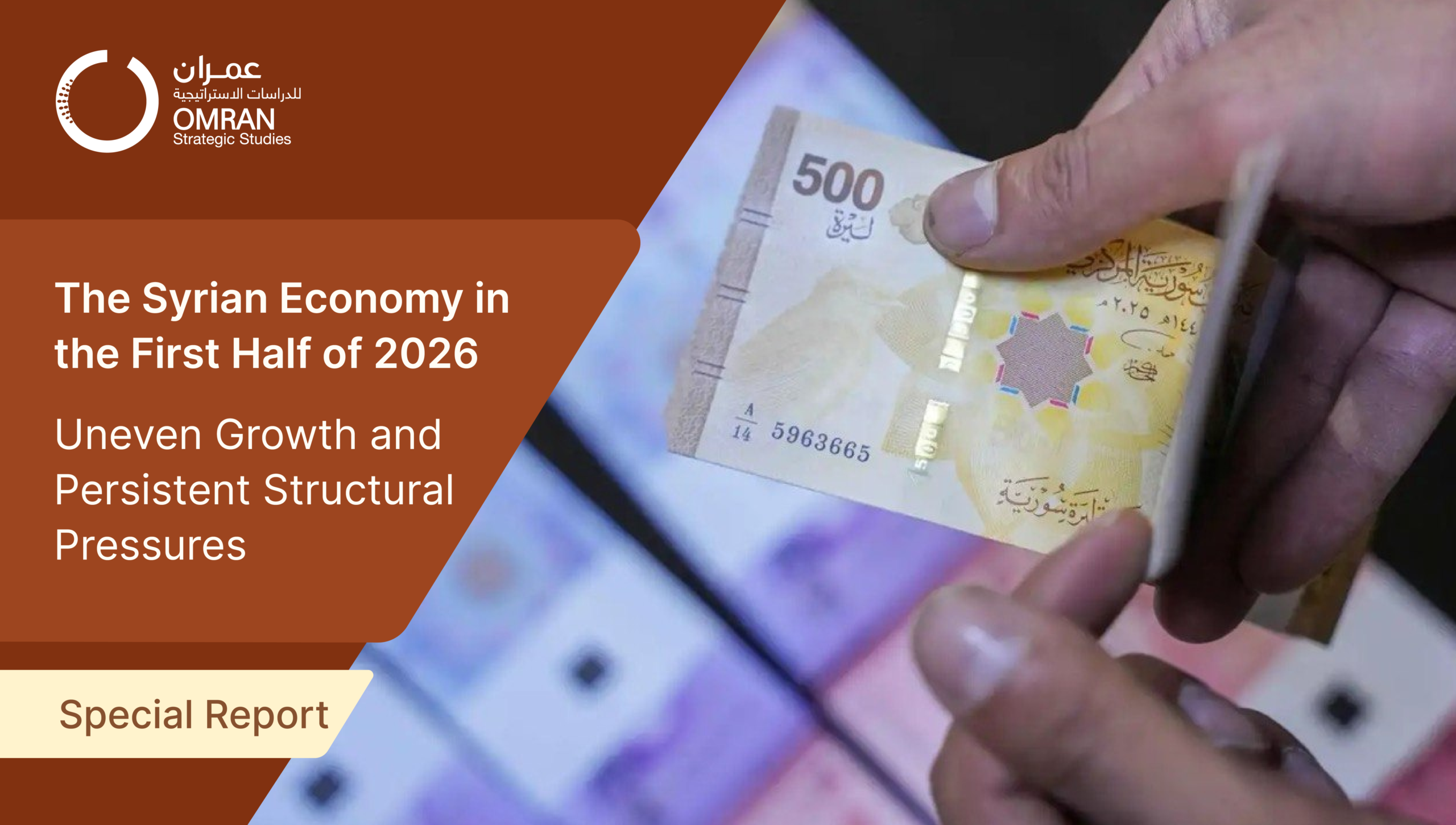
- Currency and fiscal pressures persist: The Syrian pound depreciated by approximately 9.4% at the official rate and 14.8% in the parallel market (black market) between January and June. The 2026 budget also shifted from a limited surplus to an estimated USD 1.8 billion deficit, while current and security-related spending continues to outweigh investment expenditure.
- The bigger challenge is turning a revival in markets into a recovery in production: Although the 2026 budget projects higher and more diversified public revenues, sustainable recovery will depend on expanding productive investment, strengthening industry and agriculture, increasing higher-value-added exports, and creating employment.
For More: https://bit.ly/4dDkhHm